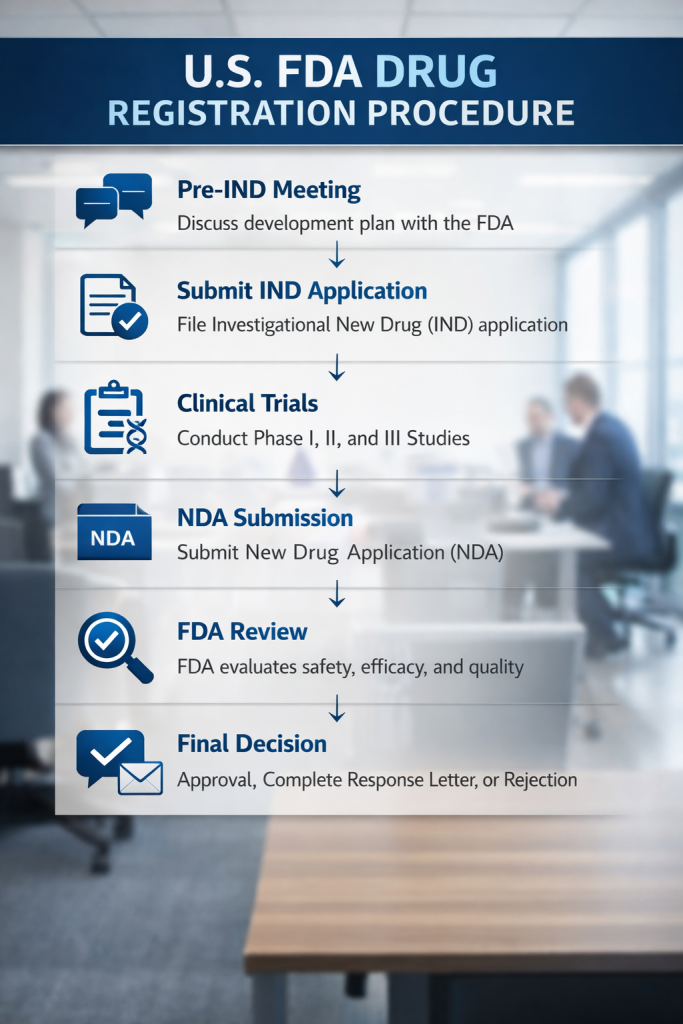
The US FDA drug registration procedure is a regulatory requirement for companies involved in manufacturing, processing, packaging, labeling, or testing pharmaceutical products intended for the United States. Registration with the U.S. Food and Drug Administration creates official regulatory visibility and is essential before products can move through US distribution channels.
What the US FDA Expects From Drug Registration
US FDA drug registration centers on establishment registration and drug product listing. It does not grant marketing approval. Instead, it allows the FDA to identify responsible facilities, understand manufacturing activities, and monitor products across the supply chain. Both domestic and foreign establishments performing regulated activities must follow this process.
Step 1: Confirm Establishment Activities
The first step is to clearly define what your facility does. Activities may include API manufacturing, finished dosage manufacturing, testing, repackaging, or relabeling. Each activity carries specific compliance expectations, and accurate selection during registration is critical to avoid future corrections or regulatory questions.
Step 2: Designate a US FDA Agent
Non-US establishments are required to appoint a US FDA Agent. This agent serves as the official point of contact for FDA communications, inspection coordination, and emergency notifications. A well-informed agent helps ensure that regulatory messages are handled promptly and correctly.
Step 3: Submit Drug Establishment Registration
Drug establishment registration is completed electronically using the FDA registration platform. Companies must provide legal entity details, facility location, operational roles, and authorized contact information. Registration status must be renewed every year during the FDA renewal period to remain active.
Step 4: Complete Drug Product Listing
Once the establishment is registered, each drug product must be listed individually. Drug listing includes product name, dosage form, strength, route of administration, labeling information, and manufacturing site linkage. After acceptance, the FDA assigns a US FDA registration number, which is commonly requested by importers, distributors, and compliance teams.
Step 5: Maintain Continuous Compliance
Registration and listing trigger ongoing regulatory responsibilities. Facilities must comply with US FDA cGMP requirements and maintain inspection readiness at all times. Documentation accuracy, quality systems, and change management are essential to preventing regulatory actions or supply interruptions.
Importance of Structured Regulatory Support
Although the registration process is digital, regulatory accuracy is not optional. Errors, missed renewals, or incomplete listings can delay shipments or raise compliance concerns. Many companies choose to work with a specialized US FDA Consultancy to manage timelines and reduce risk.
As part of long-term compliance planning, XPRO America, a US FDA Consultancy, supports companies throughout registration, listing, and ongoing regulatory maintenance. When internal teams are ready to move forward, communication can be initiated by connecting at support@xproamerica.com to align on the appropriate compliance approach.
Final Say
US FDA drug registration should be viewed as a continuous compliance commitment rather than a one-time filing exercise. Companies that build structured oversight around registration, listings, and renewals experience fewer disruptions and stronger regulatory confidence. Consistency in data, proactive compliance management, and timely updates are what sustain uninterrupted access to the US pharmaceutical market.
Leave a Reply